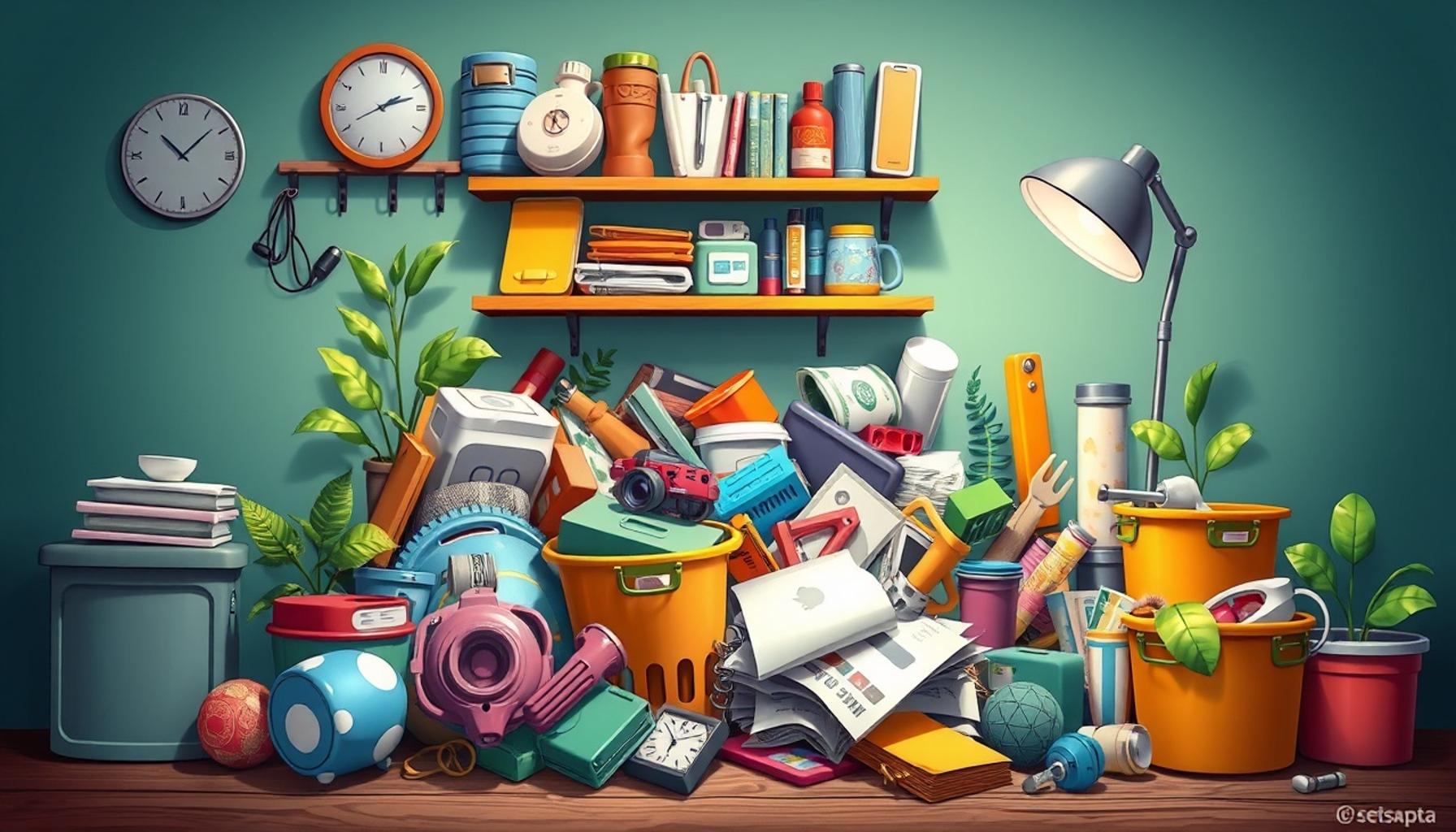
The Psychology of Clutter: Understanding Our Relationships with Objects and the Need for Detachment

The Cultural Significance of Clutter
In a world filled with consumerism, clutter has become a common backdrop to modern living. From overflowing closets to cluttered desks, our environments often reflect our psychological state. But why do we hold onto certain objects while letting go of others? This intricate bond between individuals and their possessions merits deeper examination.
The Emotional Landscape of Our Belongings
Our relationship with possessions is complex and multifaceted, shaped by various factors that inform our decisions about what to keep and what to discard. For many, emotional attachments play a significant role. Sentimental items, such as family heirlooms or gifts from loved ones, can trigger vivid memories and feelings, making it difficult to detach from them. For instance, a childhood toy might evoke cherished moments, thereby creating an emotional barrier that complicates the decluttering process.
Influences Beyond the Individual
Social influences also contribute significantly to our cluttered lifestyles. The modern consumer culture, bolstered by social media trends, often leads individuals to acquire items that may not serve a personal purpose but are deemed desirable by peers. For example, the rise of minimalism has brought a wave of interest in decluttering, yet paradoxically, the pursuit of minimalist aesthetics can lead to the accumulation of items just to fulfill social expectations.
Cultural norms further amplify our attachment to possessions. Different backgrounds dictate what we value in life, from Asian cultures valuing family heirlooms to Western societies often focused on personal achievements reflected through material goods. For instance, owning a certain brand of car or clothing can signify social status and success, complicating the decision to let go of such symbols.
The Struggle with Detachment
Understanding these connections can shed light on the need for detachment, yet many people struggle with this concept. Common barriers include:
- A fear of loss – Letting go can feel like losing a piece of ourselves, especially if those objects are tied to significant memories.
- Concerns about making the wrong decision – The anxiety associated with decluttering often stems from the uncertainty of whether we made the right choice in discarding certain items.
- An identity tied to material possessions – For some, their belongings can serve as an extension of their identity, making it difficult to separate self-worth from what they own.
Ultimately, the challenge lies in navigating this intricate relationship with our belongings. By examining our motivations and reactions to clutter, we can begin to foster a healthier, more intentional relationship with the objects around us. This journey towards simplicity and clarity may hold the key to reimagining our living spaces as peaceful sanctuaries.
In conclusion, while decluttering can be a daunting task, it may significantly improve our mental well-being and create more serene environments. Embracing the process with an open mind and understanding the influences behind our attachments can empower us to make meaningful choices about what to keep and what to let go.
Digging Deeper into Our Cluttered Minds
When we explore the psychology of clutter, we encounter a labyrinth of feelings, beliefs, and memories tied to the objects we possess. Delving into our clutter not only reveals how we curate our environments but also illuminates profound insights about our identities and values. For many individuals, a significant aspect of this relationship lies in the perceived functionality of their items. Ultimately, we ask ourselves: Do these belongings serve a purpose, or do they merely occupy space both physically and emotionally?
The Role of Functionality in Attachment
At its core, the function of an object can either deepen our attachment or facilitate detachment. Items that provide utility—kitchen gadgets, tools, or even furniture—often maintain a more straightforward justification for existence in our lives. However, many possessions lack immediate function yet carry immense sentimental value. The juxtaposition of functional and sentimental items creates a delicate balance; understanding this dynamic can be crucial in the decluttering process.
Research suggests that our emotional state influences how we perceive value in the things we own. When we are feeling stressed or anxious, we may cling to belongings that offer comfort or familiarity, even if they no longer serve us. Conversely, when feeling empowered or at peace, we may find it easier to part with items that clutter our space. This psychological ebb and flow highlights the unpredictable nature of our attachments and the importance of examining our emotional landscape while decluttering.
The Impact of Clutter on Mental Health
Scientific studies have indicated a correlation between clutter and mental well-being. Living in disorganized spaces can exacerbate feelings of stress, anxiety, and even depression. A cluttered environment can distract the mind and hinder productivity, leading to a vicious cycle where disarray breeds emotional discomfort and the inability to address it. Those struggling with cluttered spaces may find themselves trapped in a pattern of avoidance, preferring to ignore the overwhelming mess rather than confront the underlying emotional ties.
- Overstimulation – Clutter can serve as sensory overload, making it hard to focus or relax.
- Feelings of guilt – The inability to part with items can stem from guilt associated with waste or disappointment, often magnifying stress.
- Procrastination – Clutter can result in procrastination due to the overwhelming task of decluttering itself, leading to further accumulation of items.
By acknowledging these influences, we can begin to understand our clutter in a deeper context. The process of decluttering transforms into more than a mere act of organizing; it becomes an opportunity for personal growth and healing. Embarking on this journey invites us to confront not only our possessions but also the emotional narratives that accompany them—a crucial step in promoting mental wellness and cultivating clarity in our lives.
The Emotional Weight of Clutter
Understanding our relationships with objects requires a deep dive into the emotional attachments we form. Many people accumulate items due to sentimental value, often retaining objects that remind them of different phases in their lives. This psychological connection can create emotional clutter, contributing to feelings of anxiety and overwhelm.
Detachment and Mental Clarity
Learning to detach from objects not only alleviates physical clutter but also clears mental space. By simplifying our surroundings, we are more likely to experience improved focus and creativity. Research suggests that reducing clutter can lead to enhanced productivity and a clearer mindset, which is particularly beneficial in fast-paced, demanding environments.
Practical Steps Towards Detachment
Implementing practical strategies for decluttering can aid in the journey towards emotional detachment. For instance, the ‘one in, one out’ rule encourages individuals to dispose of an item before acquiring another. This method promotes a more mindful approach to consumption, urging individuals to consider their true needs versus impulse buys, which often contribute to clutter.
The Influence of Consumer Culture
The modern consumer culture constantly bombards us with advertisements and the allure of new possessions. This can lead to a cycle of constant acquisition, further complicating our relationship with material goods. To counteract this, individuals can benefit from adopting a minimalist mindset, focusing on quality over quantity. Embracing minimalism can serve as an antidote to the excess perpetuated by societal norms, leading to a more fulfilling existence anchored in what truly matters.
The Journey of Self-Discovery
Ultimately, the process of understanding our clutter is also a journey of self-discovery. The more we explore our motivations behind holding onto certain items, the more insight we gain into our values and priorities. By embracing detachment, we not only rid ourselves of the excess but also uncover a more intentional way of living that aligns with our genuine selves.
| Category | Advantages |
|---|---|
| Emotional Clarity | Less stress from emotional ties; reduces anxiety. |
| Mental Space | Enhanced focus, leading to improved productivity. |
| Mindful Consumption | Encourages thoughtful purchasing, reducing waste. |
| Self-Discovery | Uncovers values and priorities through decluttering. |
The Emotional Burden of Belongings
As we navigate through our cluttered spaces, we often find ourselves not just dealing with physical items but also grappling with the psychological weight they carry. Our belongings are imbued with memories and stories, representing milestones in our lives. This emotional burden can create an extensive web of attachment that complicates our decision-making when contemplating what to keep or discard. We may hold onto items like old gifts, family heirlooms, or clothing from significant life events, feeling that letting go equates to losing a piece of our history.
Sentimental Value and Its Pitfalls
Research has shown that sentimental value is a primary reason individuals struggle with letting go of certain items. According to a study published in the journal Behavior Research and Therapy, individuals often overestimate the value of emotionally significant objects, viewing them as extensions of themselves. This phenomenon can lead to unhealthy levels of attachment, where the psychological cost of parting with an item becomes greater than its material value. The more we attach meaning to objects, the more difficult it can be to detach.
Consider the scenario of a parent who cannot bear to throw away a child’s artwork, despite it taking up valuable space in their home. They may perceive the art as a representation of their child’s creativity and innocence, making it tough to understand that the emotional connection can exist independently from the physical object. This highlights a common misconception: that memories can only be preserved through tangible items. Learning to reassess where we derive value from our belongings is crucial in reducing clutter while honoring our memories in healthier ways.
Minimalism as a Path to Clarity
In response to the clutter epidemic, many individuals are turning toward the minimalist movement as a solution. Minimalism advocates for a lifestyle that embraces simplicity and intentionality, prompting individuals to evaluate the true necessity of their belongings. By adopting this mindset, people can experience psychological liberation, finding that less truly can be more. A study published in the journal Social Psychological and Personality Science found that adopting a minimalist approach often results in improved mental clarity and heightened feelings of satisfaction.
The challenge, however, lies in taking the first step. It requires a conscious effort to confront not only cluttered environments but also the uncomfortable emotions associated with them. Tools such as the “Marie Kondo method,” which encourages individuals to keep only those items that “spark joy,” offer practical frameworks for evaluating our emotional attachments. In applying such techniques, people often report feelings of renewal and catharsis, realizing that the act of detachment can lead to increased personal agency and freedom.
The Journey of Letting Go
As we wrestle with the duality of attachment and detachment, the process of letting go often becomes a formidable journey. Decluttering is not simply about creating a tidy space; it embodies an opportunity for self-reflection and personal growth. For many, this journey entails exploring past traumas, unresolved feelings, or aspirations that are tied to specific objects and recognizing how these influences shape their current reality. Engaging with a therapist or counselor can enhance this process, providing a supportive environment to unpack not just physical but also emotional clutter.
- Mindfulness Practices – Practicing mindfulness can help individuals become more aware of their emotional responses to objects, allowing for more intentional decision-making.
- Gratitude Lists – Keeping a gratitude list of what items serve a purpose can help differentiate between what to keep and what to release.
- Digital Alternatives – Transitioning to digital formats for photos and documents can help preserve memories without the physical storage challenges.
Ultimately, understanding our relationships with objects extends beyond mere organization; it’s about uncovering our motivations and the narratives that inform our lives. Embracing this complexity can facilitate a deeper understanding of ourselves as we strive for clarity amidst chaos.
Conclusion: Embracing Freedom Through Detachment
The journey into the psychology of clutter unveils a complex relationship between ourselves and the objects we accumulate. As we gain insight into this connection, it becomes clear that the path to decluttering extends far beyond mere physical organization. It is intertwined with our emotional state, memories, and the narratives we create around our possessions. By recognizing the emotional burden tied to our belongings, we empower ourselves to confront the sentiments that have shaped our lives.
Adopting a minimalist approach can serve as a transformative solution, enabling us to reevaluate what we truly need and value. As studies suggest, embracing less can lead to greater mental clarity and an enhanced sense of satisfaction. The challenge lies in confronting the discomfort of letting go, which requires intentionality and self-reflection. This emotional exploration is crucial for personal growth, allowing us to discern what brings joy and what merely occupies space.
Ultimately, the act of detachment is an opportunity for liberation. By learning to appreciate memories without being tethered to physical items, we cultivate a deeper understanding of ourselves and our aspirations. Techniques such as mindfulness practices, gratitude lists, and digital alternatives can facilitate this journey, promoting emotional well-being and a sense of agency in our lives.
As we navigate this intricate landscape of attachment and detachment, we can redefine our connections with objects, fostering a lifestyle that embraces clarity and purpose. The insights gained from exploring the psychology of clutter invite us to embark on a more intentional journey, paving the way for a more fulfilling existence in an era where simplicity can truly shine.

Beatriz Johnson is a seasoned minimalist and writer with a passion for simplifying the complexities of personal organization and intentional living. With over a decade of experience in decluttering strategies and mindful consumption, she specializes in topics like space optimization, habit simplification, and sustainable lifestyle choices. Through her work on our website, Beatriz empowers readers to embrace minimalism, reduce mental and physical clutter, and create more meaningful, organized lives in today’s fast-paced world.

Beatriz
Beatriz Johnson is a seasoned minimalist and writer with a passion for simplifying the complexities of personal organization and intentional living. With over a decade of experience in decluttering strategies and mindful consumption, she specializes in topics like space optimization, habit simplification, and sustainable lifestyle choices. Through her work on our website, Beatriz empowers readers to embrace minimalism, reduce mental and physical clutter, and create more meaningful, organized lives in today's fast-paced world.