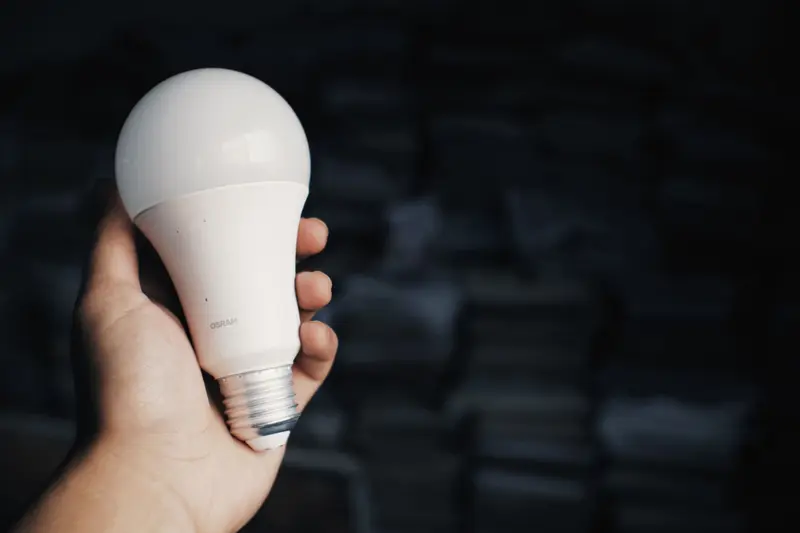
Most electric light in history was a by-product of heat. An incandescent bulb passes current through a thin tungsten filament until it glows white-hot, and only a small fraction of the electrical energy leaves as visible light. The rest escapes as infrared radiation, which is heat. A light-emitting diode, or LED, works on a completely different principle. It produces light directly from the motion of electric charges in a solid crystal, without needing to become hot first.
That difference explains almost everything about LED bulbs: why they use much less power for the same brightness, why they last so long, why they are small, and why they must be paired with a little electronics and a heat sink.
The Physics Inside the Chip
An LED is a semiconductor diode. Like the junction in a solar cell, it joins two doped materials: an n-type region that has spare electrons and a p-type region that has vacancies, called holes, where electrons are missing. A diode conducts current in only one direction. When a voltage is applied in the forward direction, electrons are pushed across the junction from the n side, and holes are pushed across from the p side.
At the junction, electrons meet holes and recombine. An electron drops from a high-energy state to a low-energy one, and the energy it gives up has to go somewhere. In some materials it becomes heat. In the materials used for LEDs, much of it is released as a photon. This process is called electroluminescence.
The energy of the photon corresponds to the band gap of the semiconductor, the energy difference between the states the electron falls between. Photon energy determines color: lower-energy photons are red, and higher-energy photons are blue or violet. So an LED emits a narrow band of color that is fixed by the semiconductor's composition. Gallium arsenide phosphide produces red light, other alloys produce green or yellow, and gallium nitride-based materials produce blue.
Making White Light
A single LED cannot produce broad-spectrum white light, because its output is concentrated in a narrow range of wavelengths. Two methods produce white. The first mixes several colored LEDs, typically red, green and blue, so that the eye blends them. The second, used in almost all household bulbs, is phosphor conversion. A blue-emitting chip is coated with a yellowish phosphor, a material that absorbs some of the blue light and re-emits it at longer wavelengths. The leftover blue plus the broad yellow glow look white. Changing the phosphor mix shifts the result from a warm, yellowish white to a cool, bluish one.
This is why the blue LED mattered so much. Red and green LEDs were available well before, but without efficient blue there was no practical way to make white light. Isamu Akasaki, Hiroshi Amano and Shuji Nakamura succeeded in the early 1990s after roughly three decades of effort by others, and they received the 2014 Nobel Prize in Physics for it. The Royal Swedish Academy of Sciences noted that incandescent bulbs lit the twentieth century and that LEDs would light the twenty-first.
A Short History
The first practical visible LED was created by Nick Holonyak Jr. in 1962, while he worked at General Electric's laboratory in Syracuse, New York. It emitted red light and was made of gallium arsenide phosphide. Early LEDs were dim and expensive, and they found work as indicator lights on instruments and electronics, and in calculators and watch displays. Over decades, improved materials and manufacturing raised their brightness and efficiency until they could compete with bulbs for general lighting.
What Is Inside a Bulb
An LED bulb is more than a chip. The chip is tiny, often a fraction of a millimeter, and a bulb usually contains several. LEDs run on low-voltage direct current, so the bulb includes a driver circuit that converts household alternating current to a steady direct current and regulates it. The current matters greatly, because an LED's brightness rises with it, but so does its heat.
That heat is why a bulb has fins or a metal base. LEDs do not glow hot the way filaments do, but the chip and its surroundings still warm up, and high temperature accelerates the slow chemical changes that dim the light. The U.S. Department of Energy notes that heat management is critical to an LED's life, and that heat sinks carry thermal energy away from the chip.
Efficiency and Lifetime
ENERGY STAR reports that LED lighting can produce light up to about 90 percent more efficiently than an incandescent bulb. Part of the reason is that a far larger share of the input energy leaves as visible light rather than as infrared heat, and part is that LEDs are directional: they emit light forward rather than in all directions, so less light is lost inside a fixture.
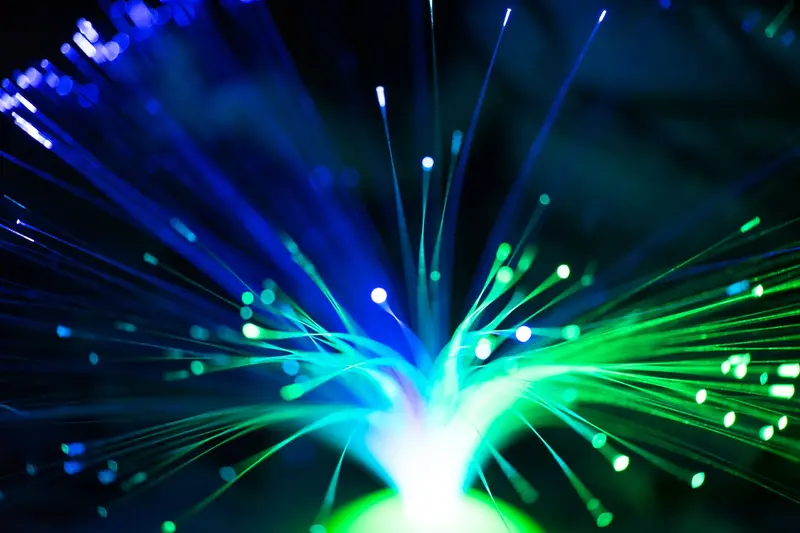
Rather than burning out at once, an LED gradually loses brightness, a process called lumen depreciation. Rated lifetime is usually the point when the output has fallen by 30 percent, which can be tens of thousands of hours. Other uses of LEDs are less obvious. They serve as sources for optical communication, since they can switch on and off rapidly, and they light the screens and remote controls around the home. Technologies that carry data through glass, such as fiber optics, also rely on semiconductor light sources related to LEDs.
Limits and Misconceptions
LEDs are not perfectly efficient. Some energy still becomes heat, phosphor conversion loses a portion of the light, and efficiency tends to fall as current increases, a phenomenon known as droop. Cheap drivers can cause flicker, which is a driver issue and not an inherent property of LEDs.
A common misconception is that LED light is inherently harsh or blue. Color is a design choice: a bulb's color temperature depends on the phosphor blend, and bulbs are made in warm and cool versions. Another is that LEDs never fail. The chip may last, but the driver electronics often fail first, especially if they run hot. A third is that LEDs produce no heat at all. They produce less than a filament for a given amount of light, but they are not cold.
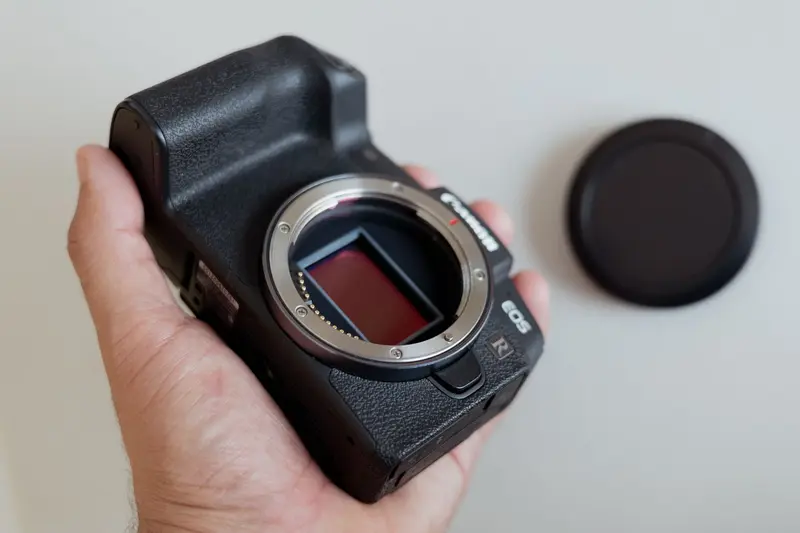
Finally, a light source is not the same as a light-sensing device. Camera chips work like reverse LEDs, as explained in how digital camera sensors capture images: they convert light to charge, instead of charge to light.
In Short
An LED makes light when electrons and holes recombine at a semiconductor junction, releasing photons whose color is set by the material's band gap. White bulbs combine a blue chip with a phosphor. Because little energy is wasted on heat, LEDs are far more efficient than filaments, though thermal management and driver quality still determine how long a bulb will last.