A battery is often described as a container of electricity, but that picture is misleading. What a battery actually contains is a pair of materials that would react with each other if they could, together with a barrier that forces the reaction to happen in two separate places. Electrons cannot cross the barrier, so they take the long way around: through a wire and whatever device is connected to it. That detour is the electric current. The energy is stored as chemistry, not as charge.
A rechargeable battery, also called a secondary cell, adds one more requirement: the reaction must be reversible. Push current backward through the cell and the products convert back into the original reactants, restoring the potential to do work. A disposable cell is designed to react only once. A rechargeable one is built so that the same materials can be reshuffled hundreds or thousands of times without falling apart.
The Parts of a Cell
Every cell has the same basic architecture. There are two electrodes: the negative electrode, called the anode during discharge, and the positive electrode, called the cathode. Between them sits an electrolyte, a medium that carries ions but not electrons. A thin porous separator keeps the electrodes from touching, since direct contact would short-circuit the cell, while still letting ions pass. Metal current collectors on each side gather electrons and connect the cell to the outside world.
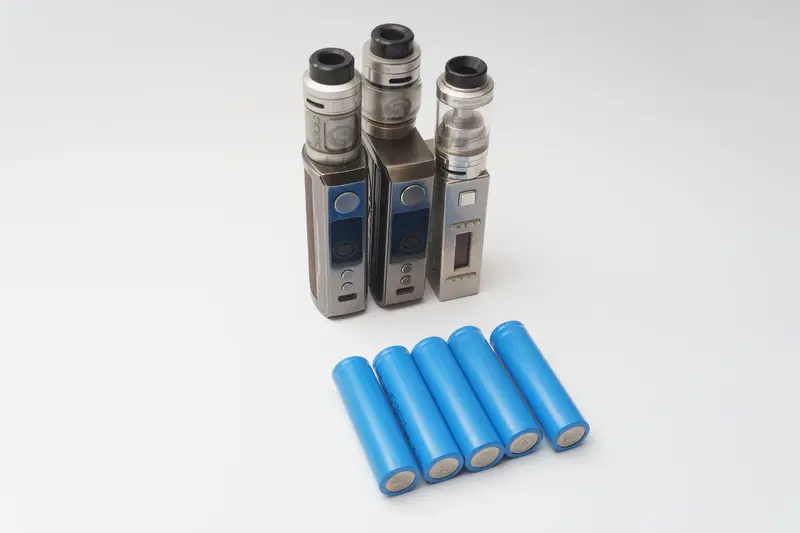
In the lithium-ion cells found in phones, laptops and electric vehicles, the anode is usually graphite, a stack of carbon sheets. The cathode is a lithium metal oxide, such as lithium cobalt oxide or lithium iron phosphate. The electrolyte is a lithium salt dissolved in an organic solvent, which is why these cells use sealed casings and protective circuitry.
How Energy Is Stored and Released
The key idea is that lithium atoms are more comfortable, in an energetic sense, inside the cathode than inside the graphite. When a charged cell is connected to a load, lithium in the graphite gives up an electron and becomes a lithium ion. The ion travels through the electrolyte and separator and slips into the crystal structure of the cathode. The electron cannot follow, so it travels through the external circuit, doing useful work along the way, and rejoins the lithium at the cathode.
Charging reverses the trip. A charger applies a voltage that pushes the electrons back toward the anode and drags lithium ions out of the cathode, through the electrolyte, and into the spaces between the graphite sheets. The process by which ions fit into a host structure without destroying it is called intercalation. Because the lithium is inserted and removed rather than dissolved and redeposited, the electrodes change shape only slightly, and that gentleness is what allows the cell to survive many cycles. Engineers sometimes call this a rocking-chair design, since the ions rock back and forth between two hosts.
The voltage of a cell depends on the chemistry of the two electrodes, not on how big the cell is. Size sets how much lithium can be stored, and therefore the capacity. A larger cell holds more energy at the same voltage. Packs in laptops and vehicles get their higher voltages by wiring many cells in series, and their larger capacity by wiring cells in parallel.
A Short History
Rechargeable batteries are older than most people assume. The French physicist Gaston Planté invented the lead-acid battery in 1859, and it is still used to start car engines because it can supply large surges of current. Nickel-based cells followed, and nickel-metal hydride became available around 1989.
Lithium is attractive because it is the lightest metal and gives up electrons eagerly, so a lithium cell can store a lot of energy for its weight. Early lithium cells that used pure lithium metal proved unsafe on recharging. In the 1970s, M. Stanley Whittingham demonstrated a cell based on intercalation. In 1980, John Goodenough showed that lithium cobalt oxide could serve as a high-voltage cathode. In 1985, Akira Yoshino built a prototype that paired such a cathode with a carbon-based anode, avoiding metallic lithium altogether. Sony released the first commercial lithium-ion battery in 1991. The three researchers shared the 2019 Nobel Prize in Chemistry for this body of work.
Where You Meet Them
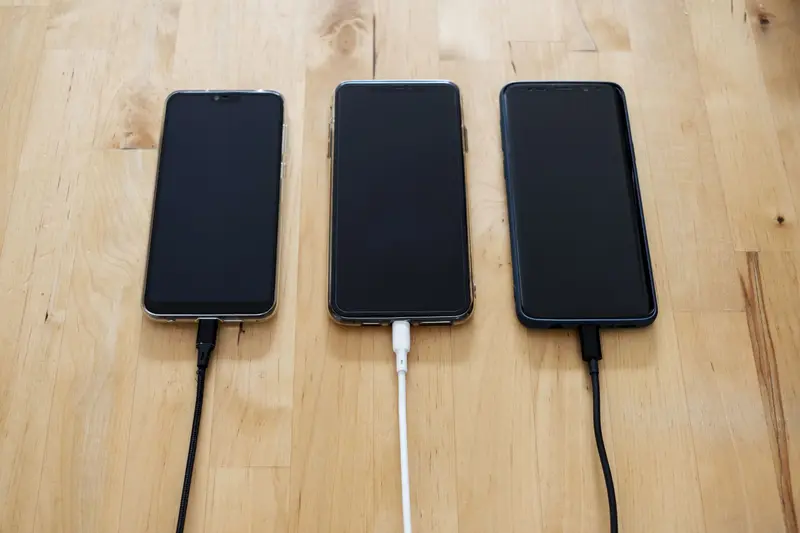
Rechargeable cells are now the quiet enabler of a long list of devices. Phones and laptops depend on them, as do power tools, cordless vacuum cleaners and wireless earbuds. Electric vehicles use packs of thousands of cells with electronic monitoring. Stationary batteries smooth out the supply from solar panels by storing daytime output for use at night, and many portable gadgets that send data wirelessly, such as those that use Bluetooth, are designed around very small cells because they sip power so slowly.
Limits and Misconceptions
No battery lasts forever. On the first charge, a thin film called the solid electrolyte interphase forms on the graphite surface. It is useful, because it protects the electrolyte from further breakdown while still admitting lithium ions, but it consumes a little lithium as it grows. Over many cycles, side reactions continue to use up lithium and to thicken that film, which increases the cell's internal resistance. The visible result is a battery that holds less charge and sags under heavy loads. Heat speeds these reactions up, which is why leaving a device in a hot car is worse for its battery than any amount of ordinary use.
Several misconceptions persist. One is the idea that batteries must be fully drained before recharging. That advice belongs to older nickel-cadmium cells, and even there the so-called memory effect is often exaggerated. Lithium-ion cells generally last longer when they are not pushed to extremes of full charge or complete depletion, because shallower cycles put less stress on the electrodes. Another misconception is that a battery's voltage falls to zero when it is empty. In practice, protection circuits disconnect the cell before that point, since draining a lithium-ion cell too far can permanently damage it, and charging one that has been damaged can be dangerous.
A third misconception is that a bigger number always means a better battery. Capacity, power delivery, lifespan, weight, cost and safety pull against each other. A cell tuned for very high power, such as those in cordless tools, typically sacrifices some capacity. A cell tuned for long life may be heavier for the energy it stores. This is also why the speed at which a battery can safely be charged is a design trade-off rather than a simple setting, a subject explored in the article on what happens during fast charging.
Batteries also connect to other technologies in unexpected ways. A device that runs on a battery still needs a way to recharge without plugging in, and the same electromagnetic principles behind an induction cooktop underlie the wireless chargers built into many phones. A charger coil creates a changing magnetic field, and a matching coil in the device turns it back into current.
In Short
A rechargeable battery stores energy as chemical potential, not as electricity. In a lithium-ion cell, ions rock between a graphite anode and a metal oxide cathode while electrons take the outside route through the device. Reversing the current restores the potential, but tiny irreversible side reactions accumulate, which is why every battery eventually fades. Understanding that trade-off explains why moderate charging habits and cool temperatures extend a battery's useful life.