Anyone who has plugged in a phone or an electric car has noticed that charging is not a steady process. The first stretch is quick, then progress slows, and the last few percent seem to take forever. This behavior is not a flaw in the charger. It is the visible result of a careful negotiation between the power source, the electronics inside the device, and the chemistry of the battery, and it explains both why fast charging works and why it has limits.
Charging speed is simply the rate at which energy flows into the cell. Energy delivered equals power multiplied by time, so a faster charge needs more power. But a battery cannot accept power without limit, because the lithium ions have to physically move into the anode, and that takes time.
The Numbers Behind Speed
Charging currents are often expressed as a C-rate, which is the current divided by the battery's capacity. A cell charged at 1C would, in principle, fill in about an hour. At 2C, it would fill in about half an hour. Real batteries do not follow this ideal exactly, because the charge rate is reduced near the end, but the C-rate is a convenient way to compare cells of different sizes.
Power is voltage times current. A charger can therefore raise power by raising voltage, by raising current, or both. Devices that advertise fast charging generally negotiate a higher voltage with the charger over a communication link in the cable, so that a given current delivers more power without making the cable's wires carry more amperes. This matters because the heat generated in a wire or inside a cell scales with the square of the current. Doubling the current roughly quadruples the resistive heating, so keeping current moderate while raising voltage is an efficient strategy for the charger and its cable.
Inside the Cell
Inside a lithium-ion cell, charging drags lithium ions from the cathode, across the electrolyte, and into the graphite anode, as described in the article on how rechargeable batteries store energy. Each ion has to diffuse into the graphite layers, and the rate at which it can do so is limited. If ions arrive at the surface faster than they can be absorbed, they pile up.
When that happens, especially in cold conditions or when the cell is nearly full, lithium can deposit on the anode surface as metallic lithium instead of entering the graphite. This is called lithium plating. It permanently removes lithium from circulation, so capacity falls, and in the worst case it forms needle-like structures that can pierce the separator and cause an internal short circuit. Preventing plating is a central design constraint for fast charging, and it is the main reason chargers do not simply push in the maximum current at all times.
Heat is the second constraint. Internal resistance converts part of the charging current into heat, and higher temperatures accelerate the unwanted side reactions that age the cell. A hot battery loses capacity faster, and a very hot one can become unsafe. Cold is a problem too, because ions move sluggishly at low temperatures and plating becomes more likely. Many electric vehicles therefore warm or cool their packs before a fast-charging session.
The Charging Curve
Most lithium-ion charging follows a two-stage recipe known as constant current followed by constant voltage. In the first stage, the charger holds the current steady and lets the cell voltage rise as it fills. This is the fast part. When the cell voltage reaches its maximum safe value, the charger switches strategy. It holds the voltage constant and lets the current fall away on its own as the cell approaches full. Pushing more voltage would risk damaging the cell, so the only way to continue is to accept a shrinking current.
That explains the familiar slowdown. The last 20 percent of a charge can take a disproportionate share of the total time, because the final stage is deliberately gentle. Some fast chargers also reduce their current in steps before the voltage limit is reached, based on the cell's temperature and state of charge.
A battery management system, a small computer that monitors the voltage of every cell group and the temperature of the pack, orchestrates all of this. It tells the charger how much current to send and can stop the charge entirely if something looks wrong.
Alternating and Direct Current
Batteries store energy as direct current, but wall outlets supply alternating current. Slower charging, such as plugging a vehicle into a household outlet or a 240-volt home circuit, sends alternating current to a converter inside the vehicle, called an onboard charger, which changes it to direct current. The U.S. Department of Energy describes these as Level 1, using a standard household outlet, and Level 2, using a 240-volt circuit.
Public fast chargers for vehicles skip the onboard converter. They contain large power electronics that convert alternating current to direct current outside the car and feed it straight to the battery. That allows much higher power than the onboard charger could handle, but the battery management system remains in charge of how much current the cells actually accept.
Everyday Examples
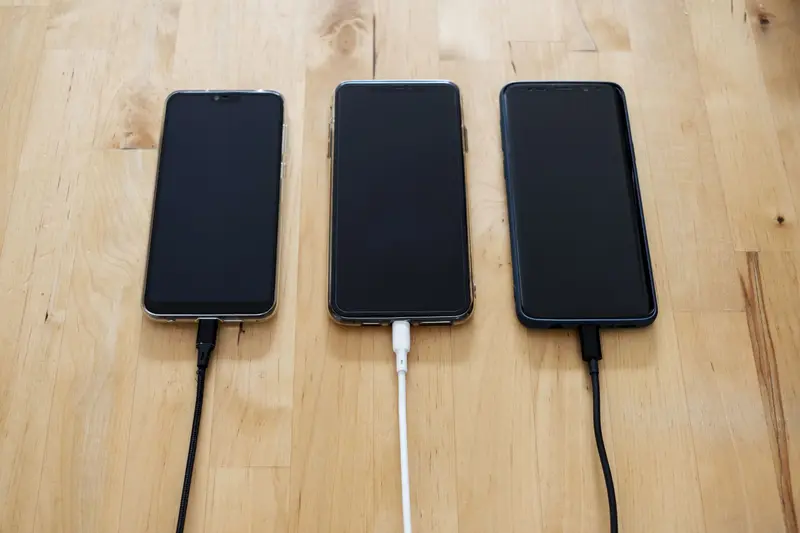
Phones use the same logic on a smaller scale. A phone that seems to charge to about 80 percent quickly and then trickles the rest is following the constant-current then constant-voltage curve. Some phones also slow charging deliberately overnight to reduce time spent at full charge, which is gentler on the cell. Wireless chargers use magnetic fields much like an induction cooktop, and their efficiency losses show up as heat in the coils, which is one reason wireless charging tends to be slower than a cable.
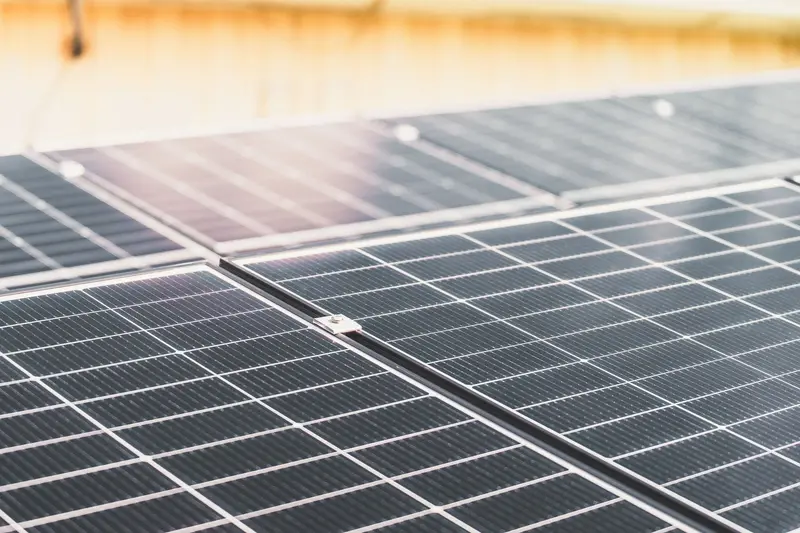
Off-grid setups, such as batteries charged by solar panels, face a related problem: the supply varies through the day, so a controller must adjust how much current reaches the battery.
Limits and Misconceptions
A common belief is that fast charging always ruins a battery. The evidence is more nuanced. Frequent high-power charging, especially at high temperature or a high state of charge, tends to age cells faster, because it increases heat and the risk of plating. Occasional fast charging within the limits set by the battery management system is generally not harmful. Modern devices are designed so that the protection logic, not the user, decides the safe rate.
Another misconception is that leaving a device plugged in overnight damages it through overcharging. Well-designed devices stop charging when the cell is full, then top up only as needed. The more relevant factor is heat: a device charging under a pillow can cook itself.
A third is that a higher-wattage charger always charges faster. The battery decides how much power it will accept, so a powerful charger simply offers capacity that a small cell may not take. A charger rated for more power than the device needs is harmless, because the device draws only what it needs. Likewise, a large vehicle battery does not charge faster just because it is large; the limit is how quickly each cell can absorb current.
In Short
Fast charging is a controlled negotiation. Chargers and batteries agree on voltage and current, the battery management system watches temperature and cell voltage, and the charger moves from a high-current phase to a voltage-limited phase to avoid damaging the cell. The limits come from physics: ions can only move into the anode so fast, and heat rises steeply with current. That is why every charging curve bends, and why the last part of a charge is always the slowest.